
From Aquaculture to Broader Water Quality Monitoring
From Aquaculture to Broader Water Quality Monitoring: BiOceanOr’s Work with the City of Cannes

When we talk about water quality in aquaculture, temperature and salinity usually come first. But one invisible force silently governs oxygen availability every single day: ocean currents.
Our scientists recently collaborated with SINTEF, Norway’s leading research institution, to better understand how water movements influence oxygen production, distribution and depletion across aquaculture sites .
The conclusion is clear: understanding currents means understanding fish behaviour, oxygen stability, and ultimately farm productivity.
Two sites with identical oxygen saturation (for example 60%) can behave completely differently depending on current speed, direction and mixing dynamics.
Water renewal can suddenly drop. Oxygen can stratify. Some cages recover faster than others.
And when oxygen stability changes, so do:
In other words, the same feeding strategy does not work under changing hydrodynamic conditions.
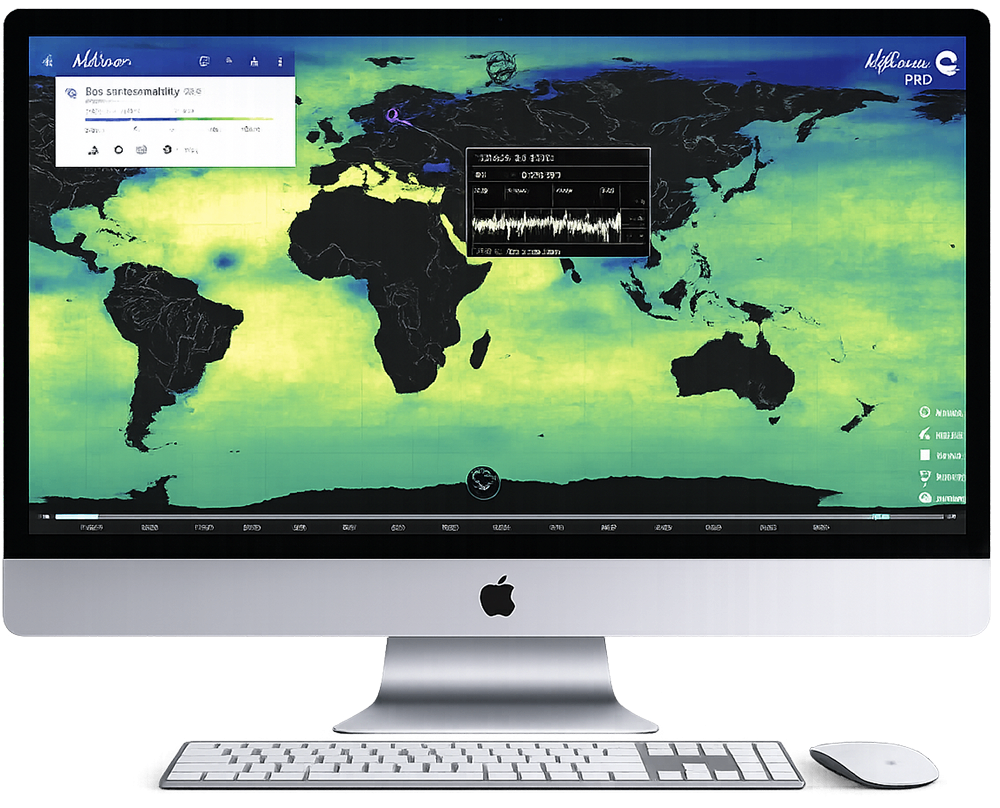
Through this joint project, we explored:
These insights are now integrated into BiOceanOr’s AI-powered oxygen forecasting models, strengthening our ability to help farmers:
By combining AI, oceanography and fish biology, BiOceanOr enables smarter, more resilient and more sustainable aquaculture operations.
Request a demo of BiOceanOr’s smart aquaculture platform and see how oxygen forecasting can improve your site performance.
Request a call
The role of currents in aquaculture is still largely underestimated. Yet in a context of climate variability and increasing biological pressure, understanding hydrodynamics is becoming a strategic advantage.
Smart aquaculture is about moving from reactive monitoring to predictive, data-driven decision-making and oxygen forecasting is at the heart of that transformation.

From Aquaculture to Broader Water Quality Monitoring: BiOceanOr’s Work with the City of Cannes

Environmental Intelligence Across Aquaculture: A Look at Our Macroalgae Project in Tanzania

Back to School for Us Too: Ready for the Season, BiOceanOr Strengthens Its Team in Chile